
LESSON 5: The OLD STAG
Here are the important word meanings of the lesson.
| English Word | Pronunciation in Hindi (उच्चारण) | Meaning in Hindi (अर्थ) |
| Lush | लश | हरा-भरा / घना |
| Forest | फॉरेस्ट | जंगल |
| Stag | स्टैग | बारहसिंगा / नर हिरन |
| Kindness | काइंडनेस | दयालुता |
| Greeted | ग्रीटेड | अभिवादन किया / नमस्ते किया |
| Fellow | फेलो | साथी |
| Plenty | प्लेंटी | प्रचुर मात्रा में / बहुत सारा |
| Hillock | हिलॉक | छोटी पहाड़ी / टीला |
| Tender | टेंडर | कोमल / मुलायम |
| Struggled | स्ट्रगल्ड | संघर्ष किया / मुश्किल से किया |
| Proper | प्रॉपर | उचित / सही |
| Recovery | रिकवरी | ठीक होना / सुधार |
| Speedy | स्पीडी | शीघ्र / जल्दी |
| Feasted | फीस्टेड | दावत उड़ाई / मज़े से खाया |
| Ashamed | अशेम्ड | शर्मिंदा |
| Realised | रियलाइज़्ड | एहसास हुआ |
| Greed | ग्रीड | लालच |
| Disturb | डिस्टर्ब | परेशान करना |
| Resources | रिसोर्सेज़ | संसाधन / संपदा |
| Wisely | वाइज़ली | बुद्धिमानी से |
| Sheltering | शेल्टरिंग | आश्रय देना / शरण देना |
| Ill | इल | बीमार |
| Worried | वरीड | चिंतित / परेशान |
| Weak | वीक | कमज़ोर |
| Juicy | जूसी | रसीला |
| Fresh | फ्रेश | ताज़ा |
| Important | इम्पोर्टेन्ट | महत्वपूर्ण / ज़रूरी |
| Nature | नेचर | प्रकृति / कुदरत |
| Enough | इनफ | पर्याप्त / काफी |
| Recovered | रिकवर्ड | ठीक हो गया |
| Spread | स्प्रेड | फैलना (जैसे खबर फैलना) |
| Vanish | वैनिश | गायब होना |
Solutions to the Exercises given in the book
Let us Think
A: Answer the following.
- Why was the old stag popular?
Answer: The old stag was popular because he was known for his kindness and he warmly greeted his fellow animals and birds every day.
- Why did the old stag not go down the hillock to meet his friends?
Answer: The old stag fell ill and was too weak to go down the hillock to meet his friends.
- Why did the green cover of the hillock slowly vanish?
Answer: Word spread about the tender green grass, and all the animals who came to visit the sick stag feasted on it, causing the green cover to vanish.
- Did the animals realise their mistake towards the end? What did they do?
Answer: Yes, the animals realised that their greed left the stag with no food to recover. They felt ashamed, decided to find food elsewhere in the forest to not disturb the hillock, and some even brought fresh leaves for the stag.
B: Think and Discuss
- Did the animals do the right thing in the end? Why do you think so?
Answer: Yes, the animals did the right thing in the end. They realised their mistake, stopped eating the stag’s grass, and started bringing him fresh food so he could heal.
- What would happen to the green plants around us if each one of us thought only of our own needs?
Answer: If everyone only thought of their own needs, we would use up all the green plants and natural resources very quickly, leaving nothing for the future or for others who need them.
Let us Learn
A. Match the words to their meaning:
1. Lush forest cool resting place
2. Tender grass green and dense woods/forest
3. Shaded spot quick healing
4. Healthy food delicate young grass
5. Speedy recovery nourishing wholesome food
Answer:
-
Lush forest ➔ green and dense woods/forest
-
Tender grass ➔ delicate young grass
-
Shaded spot ➔ cool resting place
-
Healthy food ➔ nourishing wholesome food
-
Speedy recovery ➔ quick healing
B. Look at the following words.
(lush forest, friendly animals, shaded spot, tender grass, healthy food)
These words are descriptive words that give us more details about scenes, people and objects. These words are used to make writing more interesting.
Draw the image that comes to your mind when you read the following
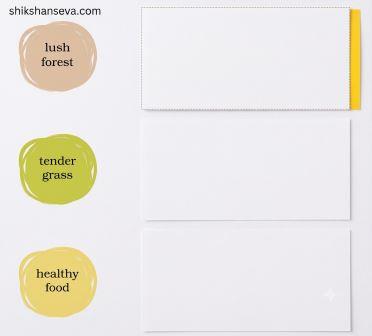
(Note for the student: you need to draw images in the blank boxes. Here is what you should draw for each!)
-
Lush forest: Draw a lot of tall trees with thick green leaves close together.
-
Tender grass: Draw small, thin, light-green blades of grass growing out of the soil.
-
Healthy food: Draw a plate filled with fresh fruits (like apples and bananas) and leafy vegetables.
C. Read the following sentence.
Each day, he warmly greeted his fellow animals and birds. The word ‘warmly’ is an adverb. Here, ‘warmly’
tells the way or the manner of the stag’s greeting. Let’s take a look at some more examples:
• The old stag slowly recovered.
• The rabbit quickly ate the carrots.
Encircle the adverbs that describe how something is done.
Answer: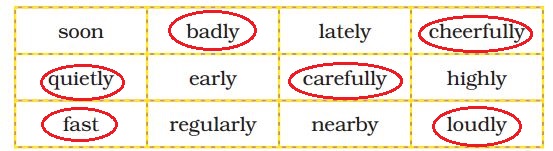
Sentence for each encircled adverb:
-
badly: The deer hurt its leg badly.
-
cheerfully: The birds chirped cheerfully in the morning.
-
quietly: The animals walked quietly to not wake the sleeping stag.
-
carefully: The squirrel carried the nut carefully.
-
fast: The rabbit ran fast across the field.
-
loudly: The elephant trumpeted loudly in the forest.
Let us Write
A. Complete the story by writing dialogues in the speech blurbs.
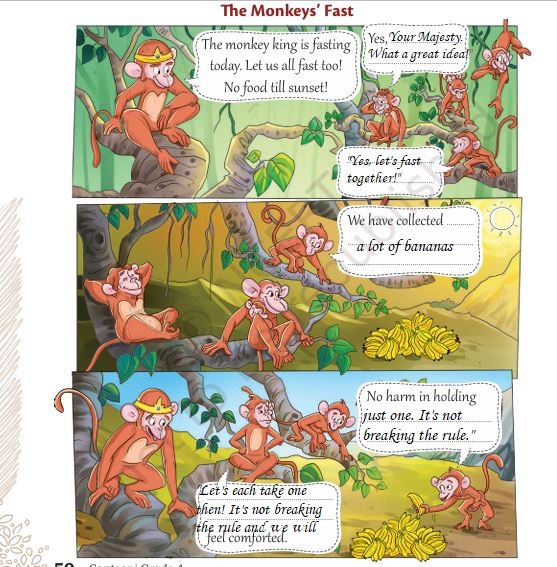
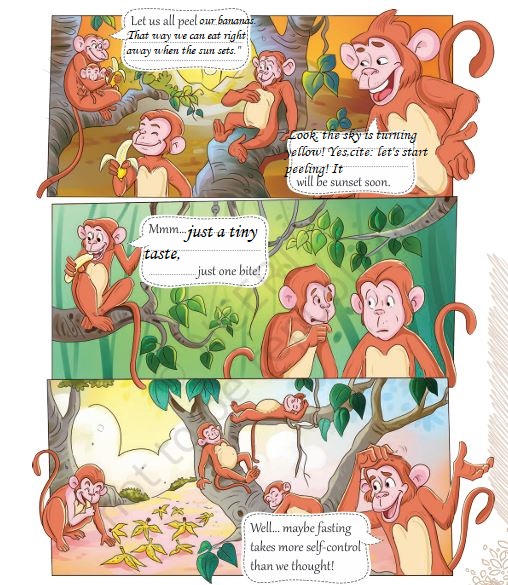
B. Write about your best friend and complete the paragraph.
Answer: (Note: You will fill this out with your own friend’s details. Here is an example to help you!)
My best friend’s name is Rohan. He is a very kind boy. He is 9 years old. He studies in class 4. There are four members in his family. His hobbies are reading and playing cricket. He wants to be a doctor. When we are together, we play lots of games. Rohan is my best friend because he always helps me.
Let us Speak
Imagine a large bowl of delicious jalebis is in your classroom. You and your friends start enjoying the sweets, one by one. Everyone loves the jalebis so much that you keep reaching for more. Now, think about what might happen next.
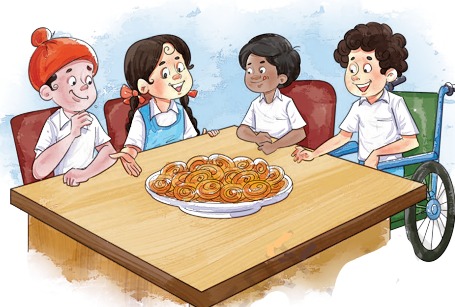 Discuss the following in the class:
- How would you feel if the jalebis were almost finished, but some friends hadn’t had enough yet?
- What will happen to the bowl of jelebis after some time?
- Why is it important to share when we have something that everyone enjoys?
- How can we make sure there are enough jalebis for everyone to enjoy?
Answer: 1. I will feel bad and sorry because all of our friends should get equal share and those who haven’t eaten will feel sad and hungry.
2: If friends keep eating all the jalebis, the bowl will become empty.
3: It is important to share so that everyone gets to enjoy the treat and nobody feels left out.
4: We can ensure there are enough by taking only one piece first and making sure everyone in the room gets one before anyone goes for a second helping.
Let us Do
Create a Thank You Card from the Old Stag.
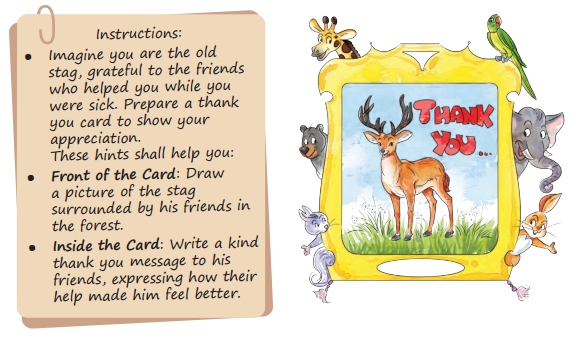
Answer: (Write this message inside the card template)
Dear friends,
Thank you so much for realizing your mistake and finding food elsewhere. I am so grateful that you brought me fresh leaves when I was too weak to walk. Because of your kindness and care, I have recovered and can walk around the beautiful hillock again!
from: The Old Stag